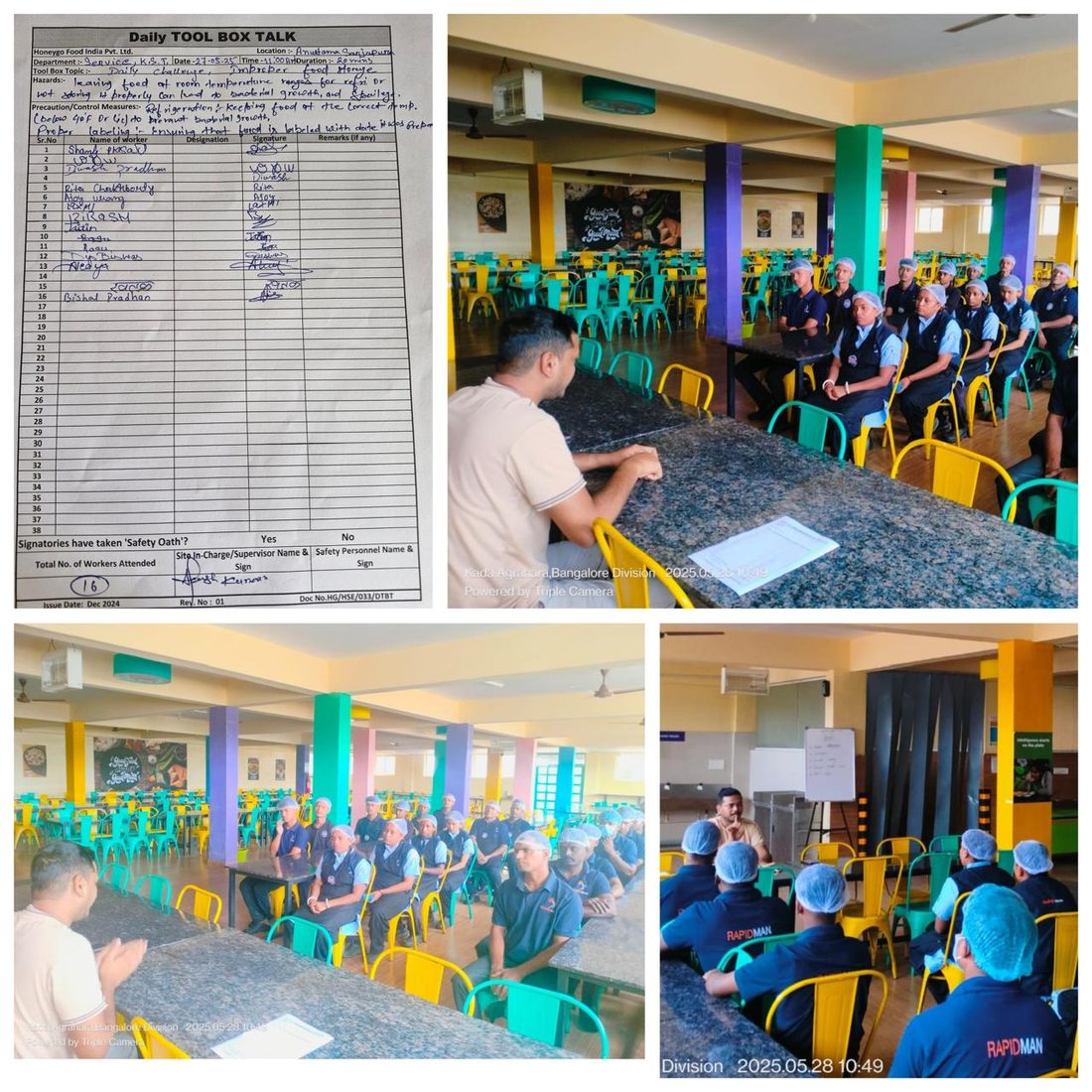
Every HoneyGo kitchen carries FSSAI registration, but a licence on the wall doesn't cook a single meal safely. The real work is in the daily checklist: temperature logs, hand-wash stations, FIFO raw-material rotation and swab testing on a fixed fortnightly calendar.
Cooked food has to stay either above 65°C or below 5°C — the range in between is where bacteria multiply fastest. Every HoneyGo counter logs holding temperatures through service, not just at the start of the shift.
We run water analysis (pH, hardness, chlorides, microbiological testing) and food analysis (E.coli, total coliforms, Staphylococcus aureus) as part of our HSEQ & ESG programme — not as a one-off before a client visit.
Blood, Widal, urine and vision tests for kitchen staff, plus background verification, are as much a part of food safety as the kitchen equipment itself.
Our team is happy to talk through the specifics of your workplace.
Request a Proposal